If your baby fusses the moment they land on their tummy, you are not alone. Tummy time is one of the first "workouts" of your little one's life, and like any workout, it gets easier (and a lot more fun) with the right moves. Here is everything you need to know, plus simple tricks that turn tears into giggles.
What is tummy time?
Tummy time is simply time your baby spends lying on their tummy while they are awake and watched by you. Babies sleep on their backs, which is the safe way to sleep, so tummy time is their chance to use a whole new set of muscles.
Why it matters so much
- Stronger neck, shoulders and back. Lifting that heavy little head is how babies build the strength they need to roll, sit and crawl.
- Fewer flat spots. Time off the back of the head helps prevent the flattening that can happen when babies spend lots of time lying on their backs.
- A bigger world to explore. From their tummy, babies see the room in a new way, practice reaching and start to track moving things with their eyes.
- The road to crawling. Pushing up on arms and shifting weight are the first steps toward getting on the move.
The World Health Organization recommends that babies who are not crawling yet spend at least 30 minutes a day on their tummy, spread across the day, while awake.
How much tummy time, by age
| Age | What it looks like |
|---|---|
| First weeks | A few minutes at a time, a few times a day. Lying tummy to tummy on your chest counts! |
| 1 to 3 months | Short, frequent sessions that slowly add up, working toward 30 minutes or more over the whole day. |
| 3 to 6 months | Longer sessions as they get stronger. Lots of reaching, pivoting and pushing up on straight arms. |
| 6 months and up | Tummy time turns into rolling, scooting and, before you know it, crawling. |
7 tricks for babies who hate tummy time
- Start on you. Lie back and place your baby on your chest. Your face is the best motivation there is.
- Get down to their level. Lie on the floor face to face. Smile, sing and talk to them.
- Pick the right moment. Try after a diaper change or a nap, not right after a feeding.
- Keep it short and sweet. A minute or two, many times a day, beats one long session full of tears.
- Add a little support. A small rolled towel under the chest and arms makes lifting the head easier at first.
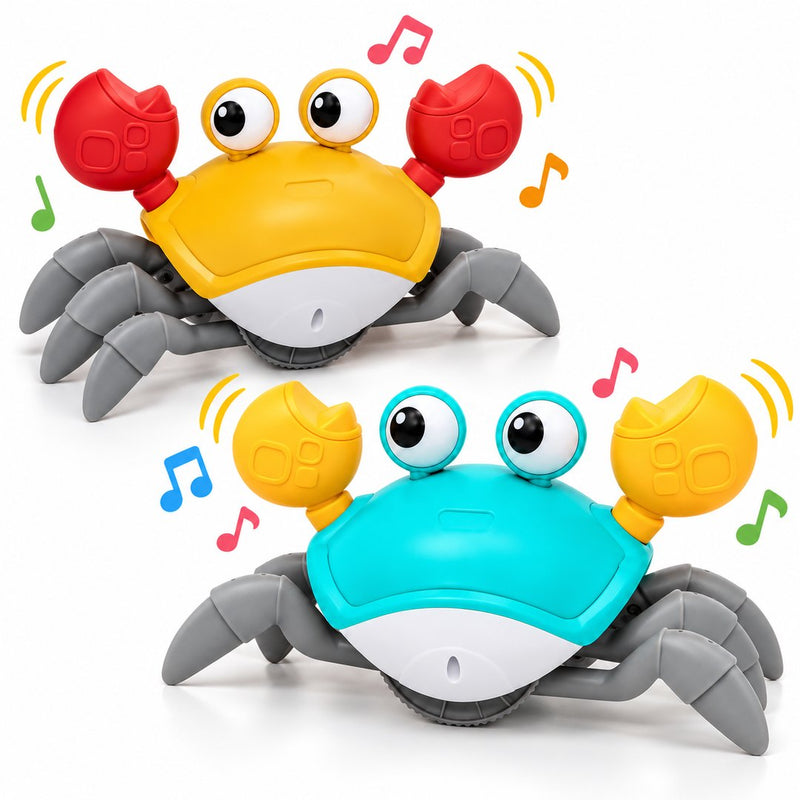
- Give them a reason to look up. Toys with lights, music and gentle movement placed right in front of your baby make lifting that head worth it.
- Celebrate every lift. Cheer, clap and smile. Babies love an audience.
Toys that make tummy time a party
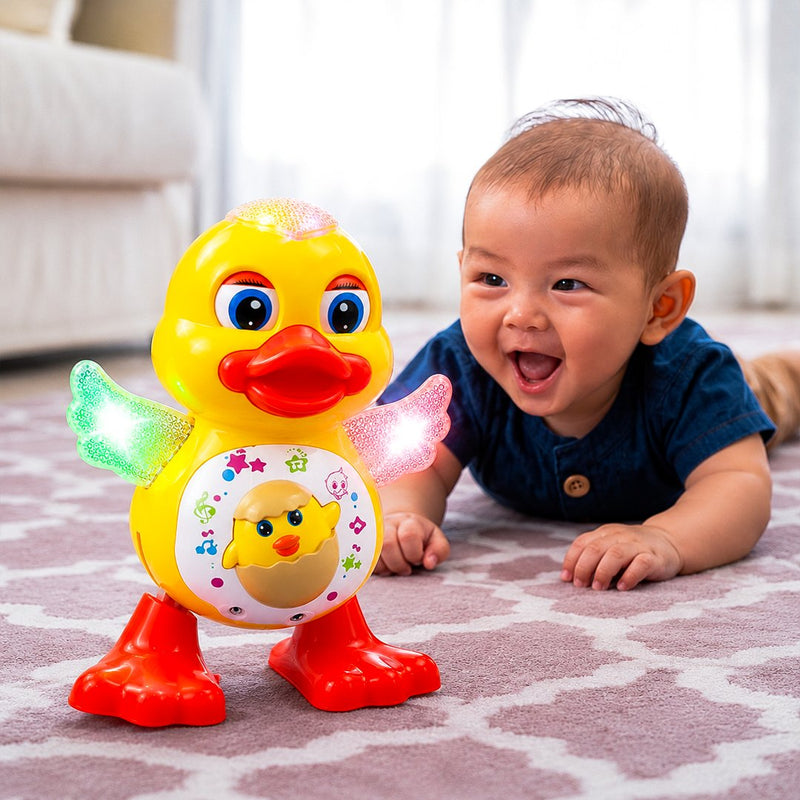
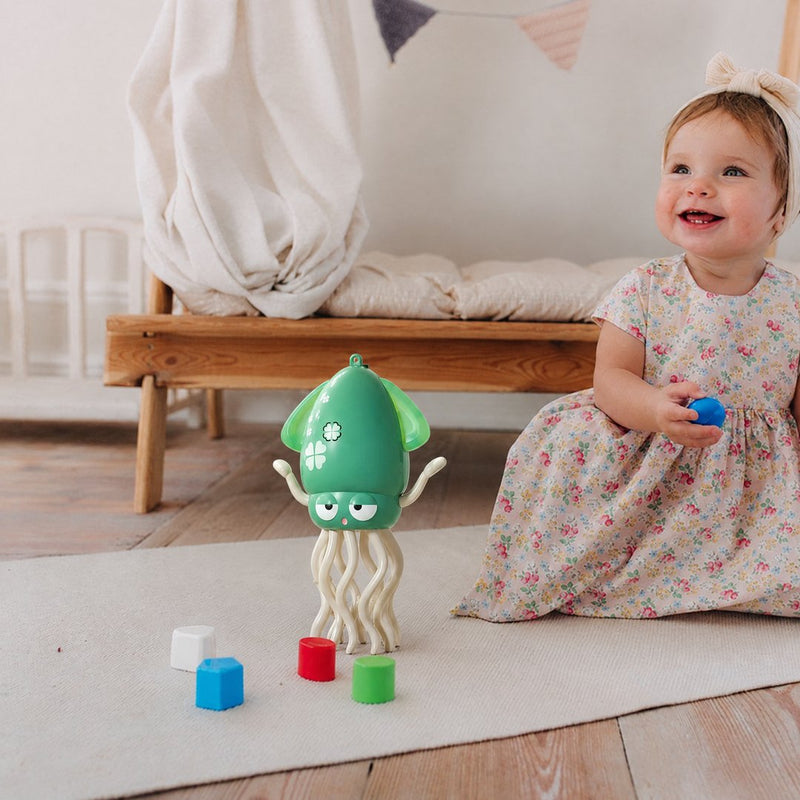
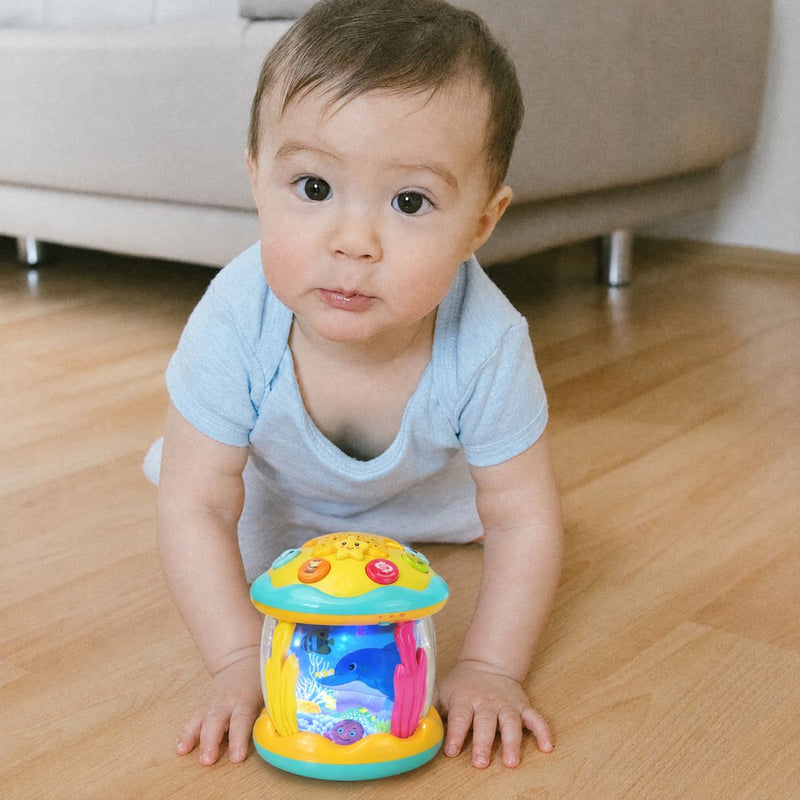
The best tummy time toys sit low, move a little, and light up or sing so your baby wants to look up and reach. Our Waddle & Groove Dancing Duck sways and glows right at eye level, the Wiggly Dancing Octopus glides away just out of reach to invite that first scoot, and the Ocean Glow Music Drum calms fussy moments with swirling sea lights.
Always keep it safe
- Tummy time is only for when your baby is awake and you are right there.
- If your baby gets sleepy, gently move them to their back in their crib.
- Choose a firm, flat surface like a play mat on the floor.
This guide is for general information. Every baby grows at their own pace, so talk to your pediatrician about what is right for your little one.